Emigrating to Finland
Emigrating to Finland
Moving abroad involves a lot of arrangements. We want to make it as easy as possible for you and take as much work off your hands as we can. Moving is not only about transporting furniture, but also about proper preparation and handling all the paperwork. Here you can read everything about emigrating to Finland.
Experiences
Are you considering emigrating to Finland? What a great choice! We hereby welcome you to the happiest country in the world! This is confirmed by the official research report, the World Happiness Report of 2025.
Nature
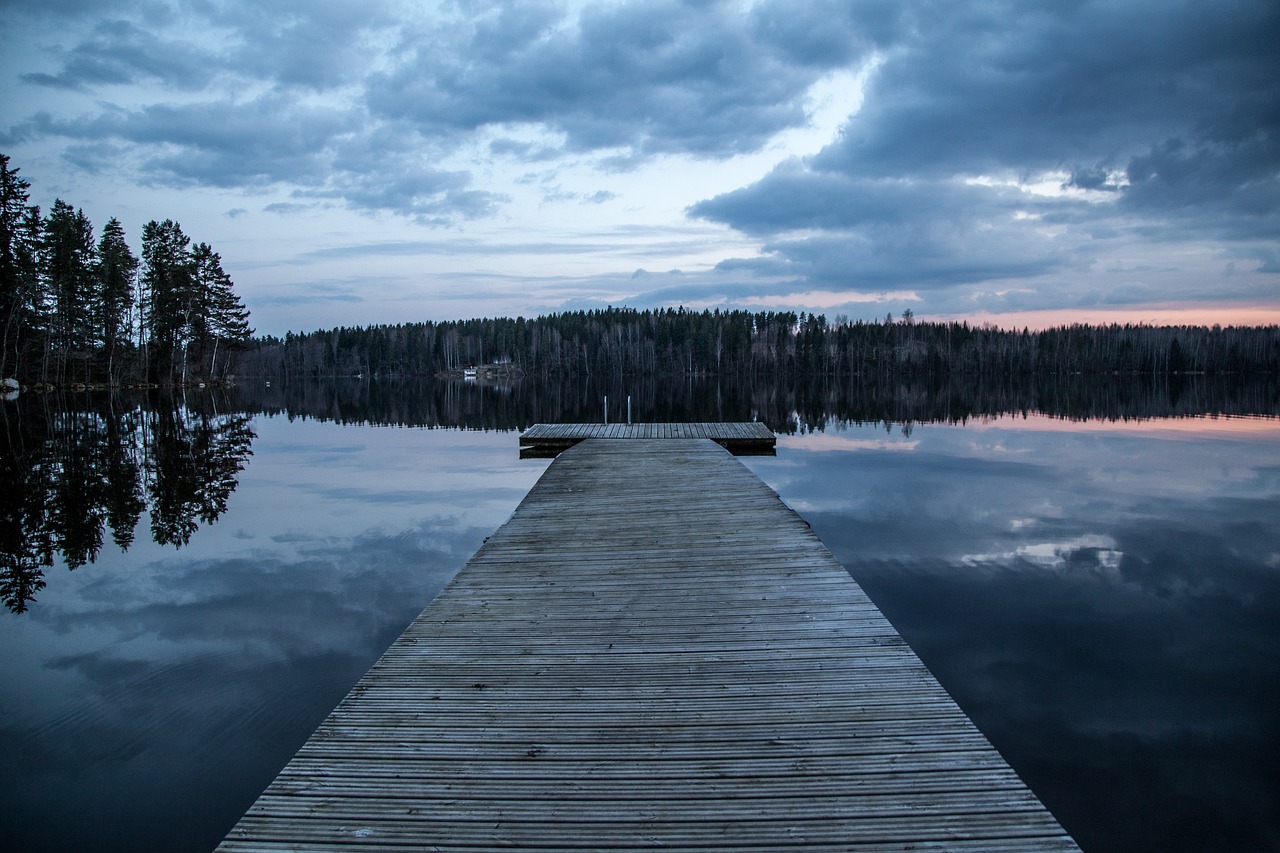
Do you love nature? Then this country is a feast for the eyes. Thanks to its many lakes, Finland is not only an excellent country for water sports, but also for winter sports. Playfully, Finland is often referred to as “the land of a thousand lakes.” In addition to its pristine waters, you will be surrounded by vast forests—about 65% of the country consists of nature! Especially in winter, Finland is extremely popular for its winter excursions and active holidays. Think of husky safaris through the forests or spotting the Northern Lights!
Low population density
Finland has only 16.4 inhabitants per km². Would you like to enjoy peace and quiet and leave behind the increasingly busy Netherlands and/or Belgium? Then Finland is the place to be. It is one of the least densely populated countries in the world. Prefer a livelier environment? Helsinki is a very modern city and can easily be compared to other major European cities.
Experiences
Online, you can find many stories from people who have moved to Finland. For example, there is a life story by Johannes Verasdonck, or Daphne, who shares her experience of living in Helsinki through videos on Instagra
Arrangements
Since we are all EU citizens, you do not need a visa to emigrate to Finland.
Applying for a Residence Permit
However, you do need to apply for a residence permit. You may do this after your move, but make sure to do so within three months. You are eligible for a residence permit if you work in Finland—either as an employee or as a self-employed person—or if you already have family living there. There are, of course, certain exceptions that may still allow you to obtain a residence permit. In general, it comes down to proving that you can support yourself financially. A pension therefore also counts as a source of income.
TIP! Visit the website of the Finnish Immigration Service, Migri. Here you can apply for a residence permit and find all the necessary information.
Another website with a wealth of information about the country is Info Finland’. For example, it explains that Finland offers a Työ- ja elinkeinotoimisto, an office for employment and economic development. They help immigrants with integration, jobs, schooling for children, and education in general.
Working in Finland
Would you like to do the same job in Finland? To get an indication of what you could earn there with your current profession, OIKOTIE offers a salary calculator. Very useful to check, so you know what to ask for during job interviews!
Are you looking for work in Finland? Then take a look at the TE-Palvelut website, where you will find many job vacancies. The Finnish government has also created a document specifically for young people who are taking their first steps into working life. If you are moving with your children, this document is also very useful for learning more about schools and employment.
Did you know that the Dutch government has created a very helpful website with information about living and working in Finland? This page contains plenty of additional practical information that can be very useful for your potential emigration.
Living in Finland
In Finland, just like in the Netherlands, people use the euro. Finland is the only Scandinavian country that uses the euro. Scandinavia is generally known as being “expensive,” but Finland is relatively affordable. Prices are fairly comparable. Alcohol, however, is much more expensive than in the Netherlands and Belgium due to high taxes. On the other hand, fish is much cheaper, as a lot of fish comes from Scandinavia.
The following websites are commonly used in Finland to search for homes:
Have you found your dream home? Then you can make an offer. Usually, an initial offer is around 5–10% below the asking price. Please note that an offer is always binding and cannot simply be withdrawn. Has your offer been accepted? Congratulations! If not, you can always make a second offer.
Financing the Home
Your offer has been accepted—now it’s time to arrange financing. Applying for a mortgage in Finland can be done at a bank of your choice. You will need to demonstrate that your income is sufficient to comfortably repay the loan on a monthly basis, including interest. In this respect, the system is very similar to that of the Netherlands.
In some cases, you pay approximately 4% tax when purchasing a home, known as varainsiirtovero. However, this does not apply if you are under 39 years old or if you will live in the property permanently. On the Finnish website InfoFinland, you can find plenty of additional information in English about buying a home.
Useful document for emigration
Did you know that the Finnish government has compiled a very useful document containing essential information for immigrants? Download the ‘Welcome to Finland’ document.
Onderwijs
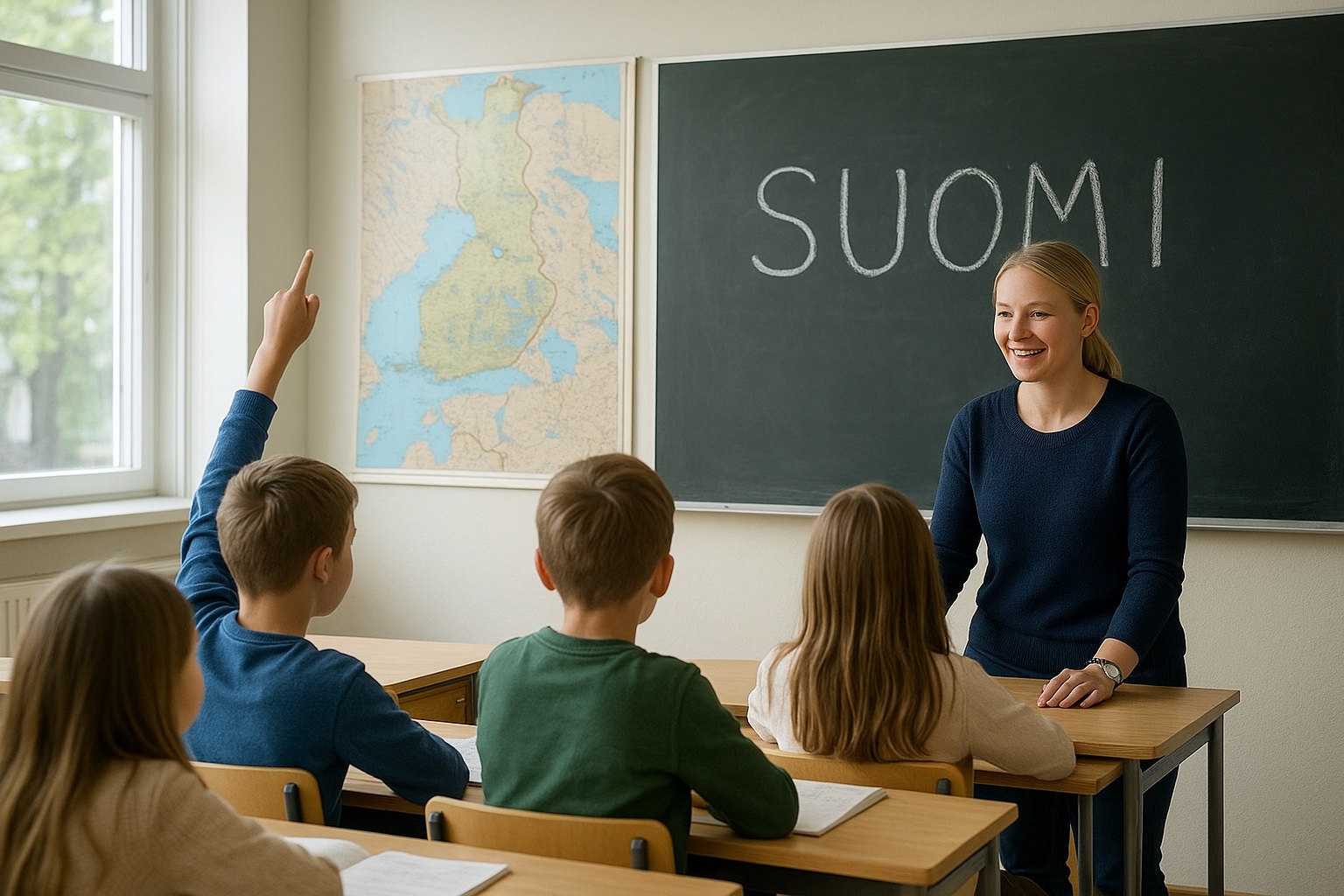
Are you moving to Finland with your children, or are you yourself at an age where you will attend school or study? Then Finland is an excellent choice! The education system in this country has been among the best in the world for years. Since 2018, it has ranked in the top five globally!
The education system is structured as follows:
- Pre-primary education: Esiopetus
- Nine years of primary education: Peruskoulu
- Lower secondary education
- Upper secondary vocational education
- Higher education
Pre-primary education is for children up to the age of five. This childcare is available from eight months of age and is completely free. If your child is six years old, they can still attend Esiopetus, an additional year of pre-primary education.
Children are required to attend school from the age of seven to sixteen. Primary education in Finland is divided into two stages. The first six years are comparable to the Netherlands, with children taught by one teacher. In the final three years, students are taught by multiple teachers, each specializing in their own subject. After secondary education, students are prepared for vocational education and potentially university.
Why does Finnish education excel?
Now that you have a general understanding of the Finnish education system, why does it perform so exceptionally well worldwide?
Social security
Who is entitled to what?
All residents of Finland are eligible for social security benefits. These include a basic pension, healthcare, benefits, and allowances for families. If you also work in Finland, you are entitled to additional employment-related benefits, such as coverage for illness or accidents. Every resident has the right to access healthcare and other social services through their municipality.
Complete overview
Are you interested in a complete overview of all social security rights in Finland? The European Commission has compiled a useful document for this purpose. It is available for download in Dutch and provides extensive guidance.
Starting your own business
Starting your own business in Finland is possible for EU citizens, but you must also be registered in Finland with a residence permit. Generally, the following steps apply to Dutch and Belgian citizens:
- Register with the Finnish Immigration Service via Migri.
- Register with the municipality where you live via Maistraatti.
- Choose the type of business you want to start, select a legal structure, and register via the Finnish Patent and Registration Office’s Trade Register through www.prh.fi en www.ytj.fi.
Would you like to know more about taxes, costs, and registrations? The Finnish government has created a very practical guide that clearly explains everything about starting your own business. All possible steps are included, and thanks to the visualizations, it is very easy to read and understand.

Healthcare
Many Scandinavian countries are known for their excellent healthcare systems—but how does Finland compare?
Each municipality in Finland manages its own healthcare services and is responsible for their implementation, although healthcare is partly funded by the state. As in many Scandinavian countries, healthcare in Finland is very well organized.
Contributions
If you plan to move to Finland, the municipality where you live may ask you to pay an annual contribution for the services offered. A certain fee may also be charged for medical treatments, including hospital admissions. Paying for private health insurance, as we are used to in the Netherlands, does not exist. As a result, you can save a significant amount of money each year.
In addition, preventive healthcare is always free for everyone. Do you have children? All healthcare services are free up to the age of 16.
Would you like to know exactly which services are free and which require payment? Visit the website with information about healthcare services in Finland.

Language
Finnish is, surprisingly, not the only language spoken in Finland. Swedish is also recognized as an official language. In fact, both languages are treated equally in the Finnish constitution. Historically, Swedish was the language of the elite, while Finnish was spoken by the working class. Today, most Finns speak Finnish, but don’t be surprised if you also hear a lot of Swedish.
Finnish is not easily comparable to other (Scandinavian) languages. For Dutch speakers, it is generally difficult to understand, let alone read. One reason is the extensive use of vowels in words, which makes pronunciation more challenging for us. But don’t worry—just like in any country, you’ll quickly pick up some basics, and until then, you can get by perfectly well with English!
Would you like to learn some basic Finnish at home in advance? You can do so using the handy Duolingo app.