Emigrating and becoming a farmer in Denmark
A New (Farming) Start in Denmark
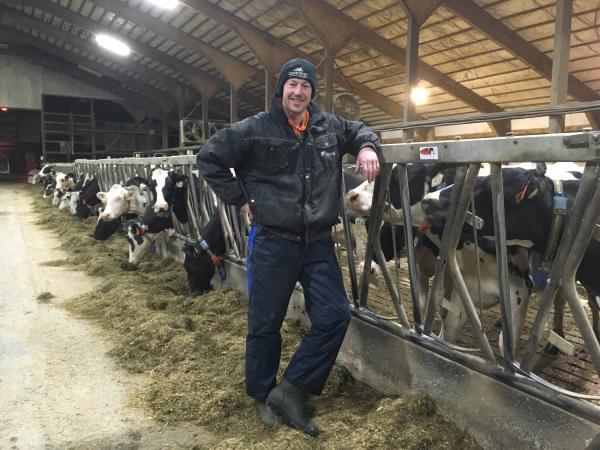
Wouter Ham moved in early 2021 from Twisk in the Dutch province of North Holland to Southern Jutland, a peninsula in Denmark. There, he aims to start a successful livestock farm and possibly expand it in the future.
The first question people often ask when someone moves abroad is the same: what were the reasons for emigrating?
Wouter: “Because life in the Netherlands is becoming increasingly crowded. In general life, with so many people living on such a small piece of land. That’s how the idea to emigrate came about. In the Netherlands, my farm had 80 dairy cows and 35 hectares of land. I had always planned to buy additional land, but as everything became more crowded and congested, land prices kept rising as well. So the financial aspect also played a role in the decision to emigrate. There are countries where, for the same amount of money, you can grow your business many times larger.”
Choosing Denmark
Denmark was not the first choice. “It all happened very quickly. After the first wave of COVID-19, when traveling was allowed again, our plans started to become serious. The idea had been in the back of our minds for some time, but it wasn’t until May last year that things became concrete. My wife and I discussed it and started making plans. Initially, we chose Germany because I speak the language reasonably well and it’s close to the Netherlands.
Germany eventually turned out to be too expensive. Then Denmark came into view, but at first that didn’t work out either. After another visit, this particular farm caught our attention. The business was close to bankruptcy, so investments had been put on hold. That made it a big challenge for us to turn things around. The farmhouse and farm buildings are in a beautiful location, all facilities are nearby, and at the same time we have peace and space here. There are also opportunities to grow and make money. After a lot of deliberation, we made the final decision in November last year.”
How did the emigration go?
All signals were green, but the move itself still had to be arranged. Wouter is clear about the relocation process.
“A move is always stressful. You think you’re well prepared and everything is packed, but it always feels like everything happens at the last moment, haha. The belongings were being loaded while I was still quickly doing the bookkeeping. The laptop, printer, and all the cables literally went into the truck last and were the first to be unloaded in Denmark. That’s really the ‘epicenter’ of the business.”
“You don’t really realize it until everything is loaded into the truck, but literally your entire world is in that vehicle.”
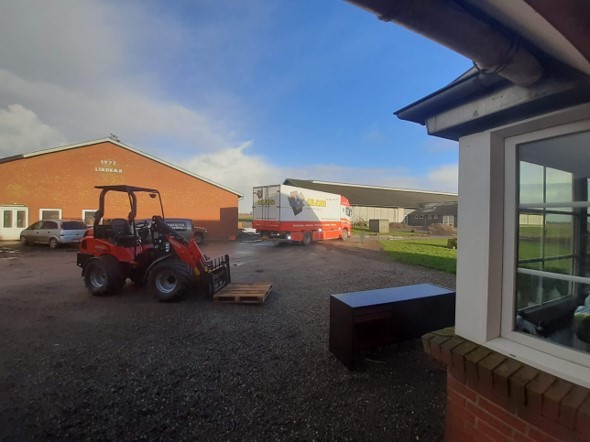
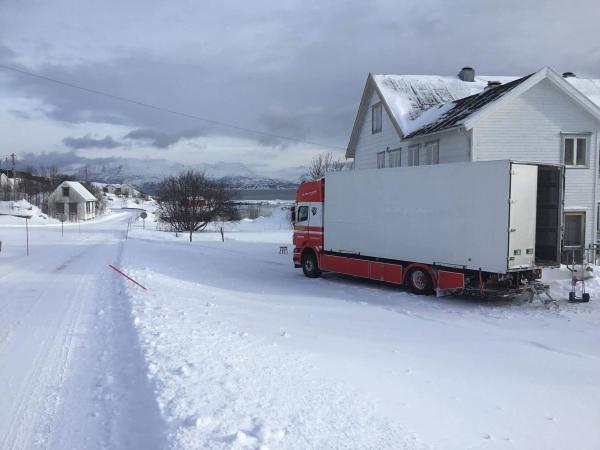
When Wouter’s household belongings were being loaded, that realization hit him. “You don’t think about it until everything is in the truck, but your whole world is in there. That’s why I found the slogan of De Jong Removals (‘We move your world’) so fitting. Our belongings were loaded on Thursday and arrived in Denmark the following Monday. At that moment, the house technically wasn’t ours yet. During unloading, we signed the final documents. On Tuesday, the last items were unloaded and De Jong Removals left again around noon.”
In addition to the move itself, many other matters had to be arranged in both the Netherlands and Denmark. “For that, we hired someone to help us; otherwise, it would have been too much to handle ourselves.”
Differences in work mentality
In some ways, Wouter still feels like he’s in the Netherlands after moving to Southern Jutland. “In this region, about 30 percent of dairy farmers are Dutch. It’s basically ‘Little Netherlands’ when it comes to farming. There are also many Dutch suppliers, which makes sense given our location. Our town borders Germany, so it’s relatively close to the Netherlands. The advantage is that we can easily ask other Dutch farmers how they’ve arranged things here.”
However, Wouter does notice clear differences in how businesses operate.
“Farming here is done differently. You really have to be on top of things contractually. In the Netherlands, everything is a bit more relaxed. Here, you have to be very business-minded. And it seems like they only work four and a half days a week.
“If you call after Friday at 1:00 p.m., no one answers. Very different from the Netherlands.”
Wouter took over a farm that was on the brink of bankruptcy. “The previous owner and his son still work with us. Right now, we’re trying to improve the daily routine to make everything more efficient. At the moment, expenses equal income, but we knew that beforehand. New robots and new feeding platforms will be installed soon. Right now, everything still takes too much time. My wife supports me with the administration, takes care of our two children at home, and we’re expecting a third.”
Social life in Southern Jutland
After a month in Denmark, Wouter and his family haven’t really been able to experience much of a social life yet. “We don’t have our official paperwork yet; everything is delayed due to COVID. As a result, the boys can’t go to school yet. That makes it feel like we’re living on an island. Fortunately, they’re very enthusiastic about the move and didn’t cry when they had to say goodbye in the Netherlands. They were actually excited! That surprised my wife and me as well.”
“So far, we’re enjoying the peace and space here, along with a beautiful, spacious home. We live so freely that deer literally walk across our land. With such a big life change, there’s always a big element of risk involved. An opportunity came our way, and we decided to take it.”