Bart decided to emigrate to Canada as a farmer
Farmers in Canada
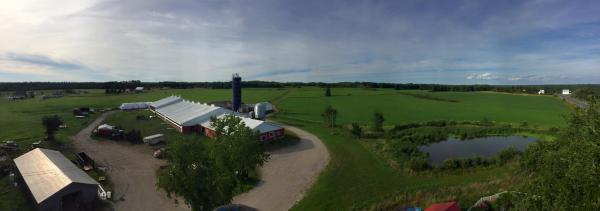
Bart van der Brug (33) left the Netherlands in early 2020 to emigrate to Canada. There, he is the herd manager of a dairy farm in Whitney, New Brunswick, and is responsible for more than 200 cows. It was a move that had been on his mind for quite some time.
The agricultural sector in the Netherlands
“I was self-employed in the Netherlands, working in the agricultural sector. Various farmers hired me for a number of hours per week to provide agricultural services. In 2014, I took over my parents’ farm to start a beef cattle operation. Unfortunately, it turned out not to be possible to make a living from it. Three or four years ago, I therefore decided to start milking goats. I was in the final stages, but in the end the plug was pulled, partly because no new milk suppliers were being accepted anymore. It was also simply difficult to start something with little money. The experience was there, but it just didn’t work out.
It had been haunting my thoughts for a while: do I try again in the Netherlands, or do I go abroad? On top of that, the regulations in our country certainly didn’t help.” One of those regulations was, of course, nitrogen emissions. “Especially the limitations that come with that. Also for beef cattle farming, which is already a very modest sector. I did have an NB permit for milking goats, but you can only apply for that for a certain number of goats. If I wanted to expand, it was questionable whether that would even be allowed.”
Dairy farming in Canada
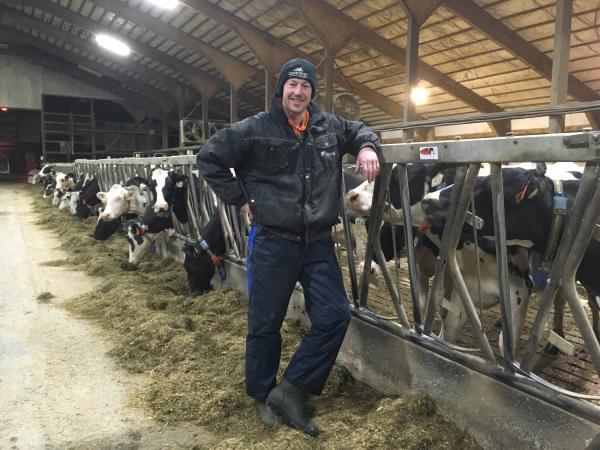
Last summer, Bart made his final decision. “I sold the farm in Hinnaard and temporarily moved in with my mother in Hommerts so I could calmly look around and decide which country to choose.” The choice was Canada, a country that was not unfamiliar to Bart. “I have a brother who has been living in Canada for sixteen years and whom I visit regularly. He works on a dairy farm. In addition, he set up his own beef farm with 60 cows. There I saw with my own eyes that in a country like Canada it is easier, with more support and assistance from agricultural institutions and the Canadian government, to start and maintain a (dairy) farm. I also wanted to continue in dairy farming myself, so I saw more of a future for me here than in the Netherlands.”
Herd manager
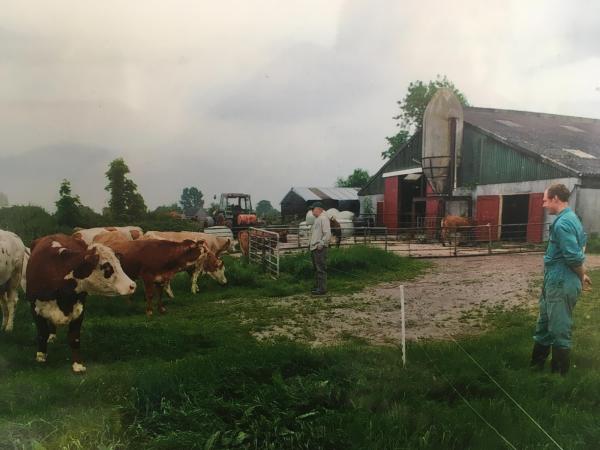
In Canada, I work for a family business that owns several farms, and at one of those farms I am the herd manager. It’s helpful that my brother lives nearby and that the language is English, because social life is important to me. Sweden was also an option, but there I would have been on my own. What matters more then? The business or the social aspect?
Personal contact and short lines
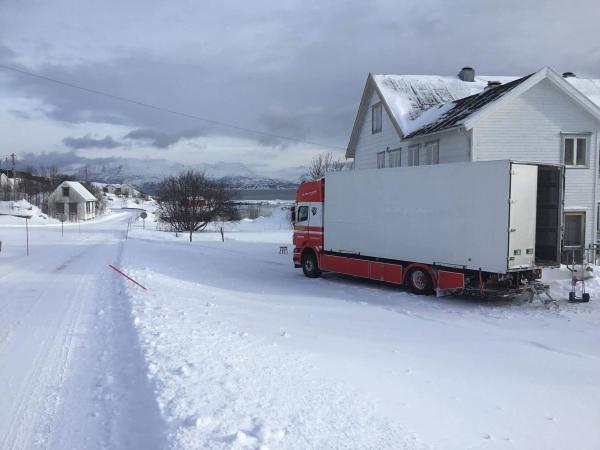
So the social aspect won out, and Bart left for Canada at the beginning of February. Preparations started early, as Bart had to look for a moving company. “I searched online for moving companies that handle international relocations. There were many options, including movers specifically focused on the agricultural sector.
In the end, I chose De Jong Verhuizingen. Communication is direct, and they come to your home themselves for a meeting. I really like that. They do a lot, but in that sense it’s a ‘small company’ because you’re not just a number. Thanks to the personal contact with relocation advisor Peter de Jong, the feeling was good. Even over the phone, I immediately noticed that they genuinely wanted to help me.”
Emigrating to Canada in two months
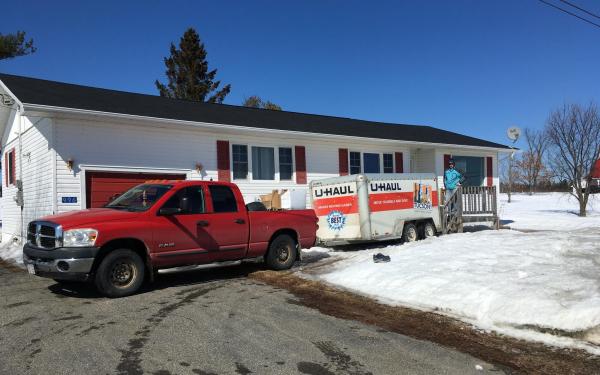
Mid-December was the first contact between Bart and De Jong Verhuizingen. Things had to move quickly, because Bart wanted to emigrate to Canada within two months. “The move really did have to happen in a short time frame, haha. They immediately said they would see what they could do and that I would be helped right away in the new year, given how busy they were at that time. The move itself mainly involved my household goods and personal belongings. There were also some agricultural items left over after the sale of the business, and those were included in the move as well.”
Fast and smooth international relocation
At the beginning of February, the time had come. Bart boarded the plane to Canada, and his belongings were shipped by sea to the West. “Fortunately, there were no problems during the move. What many people warned me about was that the Canadians are strict when it comes to importing agricultural equipment, because of possible diseases being brought in from Europe. Luckily, I didn’t experience any issues and everything went smoothly. After the container with my belongings arrived in Halifax, Canada, it was transported to Woodstock, where there is a border crossing to the United States. Customs clearance was required there. I drove there myself, and after everything was signed and the ‘clear’ signal was given, I picked up the container.”
The coronavirus (COVID-19) in Canada
Just like in the Netherlands, the coronavirus (COVID-19) has disrupted daily life in Canada. “All schools are closed and children are staying at home. That’s why they are also helping out a bit on the farm. Many businesses in the city are closed as well. A lot of people have no work and therefore no income. Agriculture will feel the impact too. Farmers may have to dump part of their milk, for example because an ice cream factory shuts down production and factories can’t sell their products.” In terms of living environment, Bart is in a good place. “The advantage of the countryside is that it’s a small world. During this epidemic, the only outing is a trip to the supermarket, which has now become the activity. After that, I quickly return to my house, which is next to the farm. So it’s easier for me to avoid a lot of contact—but of course, I would rather see things differently.”